The Pomodoro Technique for Exhausted Developers
You know the feeling. Your cursor blinks on line 347, mocking you. You've read the same block of code twelve times and it still looks like ancient hieroglyphics. Your back hurts, your eyes are sandpaper, and the idea of solving one more bug makes you want to yeet your laptop into the sun. Congratulations, pal. You're not just tired. You're in the deep end of coding burnout. And staring harder at the screen isn't the answer. Actually, the answer is staring *less*. Here's a stupidly simple fix from the 80s that still slaps: the Pomodoro Technique. It's not a magic pill. It's a permission slip to stop.
Pomodoro Isn't a Fad, It's Interval Training for Your Brain

Forget the productivity gurus making it sound complicated. Here's the raw deal: you work for 25 minutes. Then you take a 5-minute break. That's one "Pomodoro." After four of those, you take a longer break, like 15-30 minutes. That's it. The genius is in the constraint. Your brain is a sprinter, not a marathon runner. Asking it to "focus for 8 hours" is like asking Usain Bolt to run a 100-meter sprint for an entire day. It's absurd. This method forces you to work with your biology, not against it. You're not coding for an undefined eternity. You're just coding for the next 25 minutes. That, you can do.
Hacking Pomodoro For Actual Developer Work
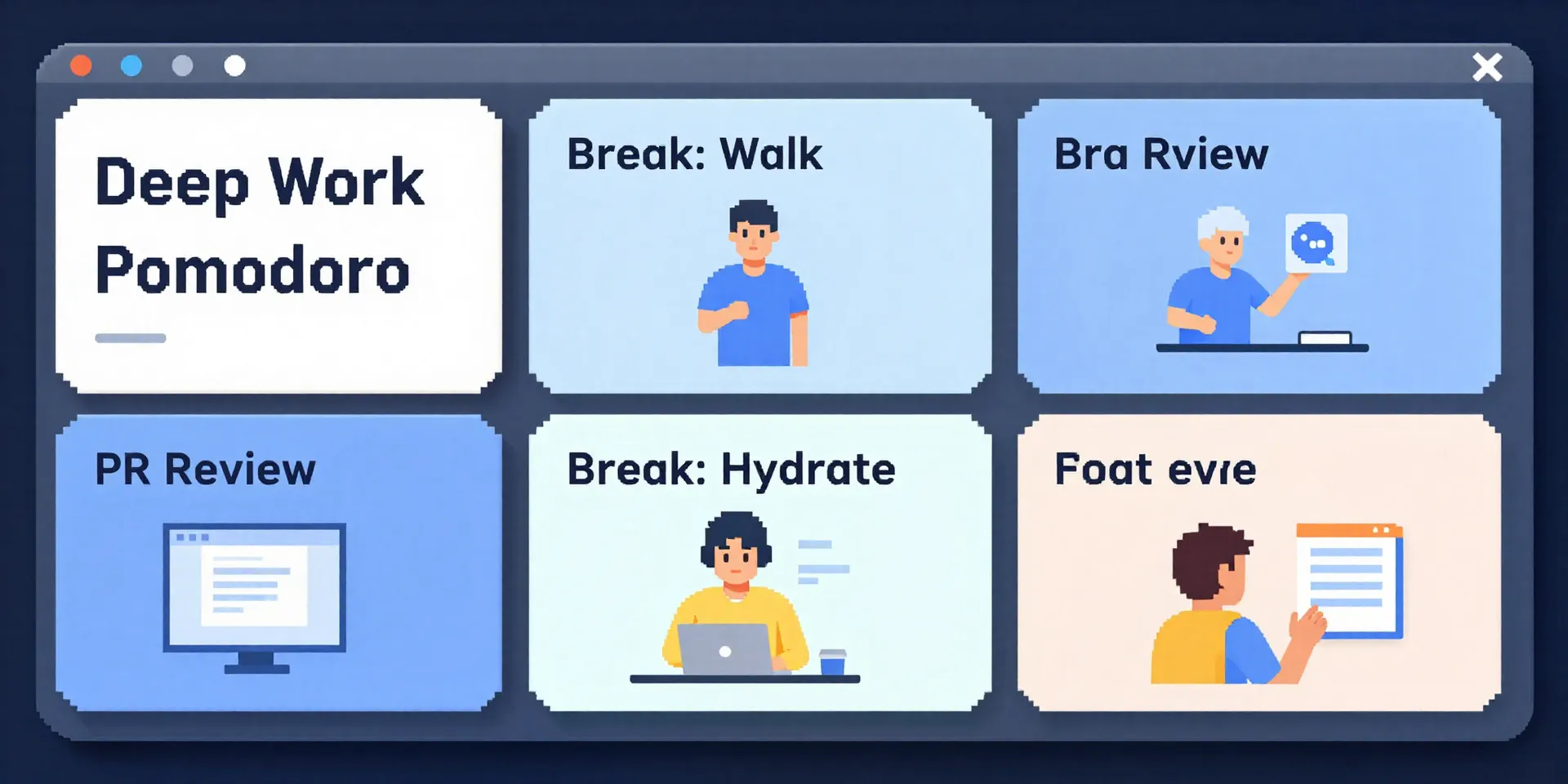
"But my flow state!" I hear you yell. "I can't just stop when I'm in the zone!" First, if you're truly in the zone, you won't hear the timer. Second, here's the thing: that "zone" often turns into a 3-hour trance where you forget to drink water, pee, or blink. That's not sustainable. The hack is to adjust the intervals. Try 50 minutes of work, 10 minutes off. Or 90 and 20. The rule isn't sacred; the rhythm is. Use the short breaks for physical stuff: stare out the window, do ten push-ups, make tea. Use the long break to actually step away. Not to check Slack. To walk around the block. The goal is to sever the mental link that says the only way to be valuable is to be physically glued to your IDE.
Breaking the Burnout Cycle With Intentional Interruptions
Remote burnout feeds on the blur. Work bleeds into life bleeds back into work. Pomodoro builds walls. It creates a container for your work, so it doesn't spill over and poison everything else. When you're on break, you're *off*. This feels weird at first. You'll feel guilty. Do it anyway. That 5-minute pause is what stops the cognitive drain from becoming a total hemorrhage. It's the system rebooting before it crashes. You're not being lazy. You're performing preventative maintenance on your most important tool: your ability to think clearly.
Start Stupid Small. Like, Right Now.
Don't overthink it. Don't plan to do eight Pomodoros tomorrow. That's a trap. Just do one. Set a timer for 25 minutes and work on one small, stupid task. Close all other tabs. Silence notifications. When the timer rings, stop. Get up. Walk to another room for five minutes. That's the win. The goal isn't perfect adherence to a time-management system. The goal is to prove to your fried nervous system that work can have a beginning, a middle, and an end. That you are allowed to stop. Your code will be there when you get back. And you might just see that bug on line 347 with fresh eyes.